
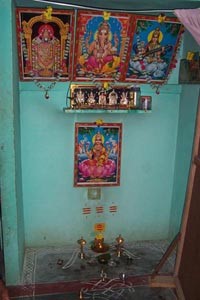
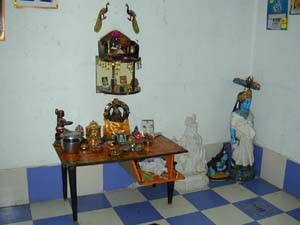
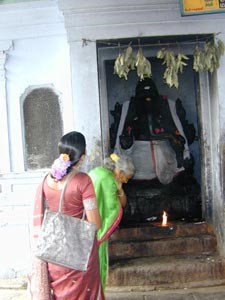
The vast majority of Hindus engage in religious rituals on a daily basis and most people will have a small shrine to their chosen god or goddess in their home. These are often just a few pictures of chosen gods and a shelf to put offerings on but can be quite elaborate depending on the status and wealth of the family. Daily ‘puja’ in the home is usually, but not always, performed by the women of the family. Families also visit the local temple or shrine regularly.
Pilgrimages are sometimes the only opportunity a villager has to travel away from the village. Tirupati Temple, about 75km north of K.V.Kuppam, often attracts well over 50,000 pilgrims in one day. They are not attracted by the free meals and accommodation or by the beauty of the temple. The people come because the legend says that whatever you wish for, Lord Venkateshwara (the temple deity) will provide.
Lord Venkateshwara once took out a huge loan from another god. The Rs. 5 billion worth of donations taken each year goes to pay this back and to do a great deal of charity work. Aside from cash donations, many people sacrifice their hair to Lord Venkateshwara: men, women and children are shaved bald as part of their visit to the temple.
Amasai or Dark Moon Day (the day before a new moon) is always a special day and it is celebrated with special rituals, house cleaning and a visit to the temple.
Life cycle rituals accompany each milestone in the life of a Hindu, from before birth through to death. After the death of a close family member the family are not allowed to celebrate any festivals for three years.
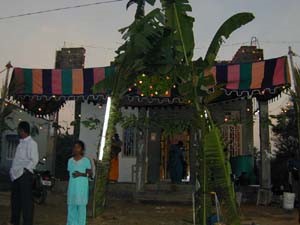
Most rituals and ceremonies vary according to the caste of the family. There is a pressure to complete the correct rituals, regardless of the cost, and this can cause hardship. Some will borrow from family or moneylenders for a housewarming, marriage or funeral and then take years to pay off the debt.
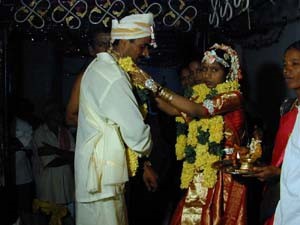
Astrologers will advise on the most auspicious time for each type of ritual. For example the Tamil month of Thai is a very popular time for arranged marriages. The bride and groom’s horoscopes are matched and the most auspicious date and time (called Ragu) set. Sometimes the auspicious time for some ceremonies is in the middle of the night!







 Friends of Vellore UK