
The Low Cost Effective Care Unit (LCECU), situated slightly away from the main hospital, aims to provide quality but low cost care to the poorest inhabitants of Vellore. Patients pay a nominal amount for registration, and then are only charged for drugs and investigations – even those charges are according to the individual’s ability to pay. They have set up some clinics in Old Town, the main slum area of Vellore, to get medical support to the very poorest.
Friends of Vellore UK are currently funding a 3-year project to implement cervical cancer screening and palliative care for those living in the most deprived areas of Vellore town. Previously neither of these much-needed healthcare services have been available to this population. In fact, there is no government funded cervical cancer screening in India at all and ladies from this area have been asking CMC Vellore if they could provide this.
These new services are being delivered by a team from LCECU. The team consists of a doctor, nurse, clinical psychologist, occupational therapist, project coordinator and a driver. LCECU work with community volunteers who live in these areas and act, together with the community health workers, as a bridge between the community and the hospital staff. They help to identify people who might benefit from treatment or screening and encourage them to seek medical help.

The ongoing costs for year 2 and year 3 of the project are the staff salaries. The annual cost of which is around £28,000. The staff split their time evenly between the palliative care side of the project and the cervical cancer screening.
From 2015-2021 Friends of Vellore UK funded £30,000 project to strengthen the outreach services of LCECU through community health workers. The community health workers work in the slum areas of Vellore town, educating the community to improve health and prevent illness, acting as the interface between the community and the unit, enabling referrals to the hospital where necessary. Typically those living in slum areas will not seek medical help, thinking it is unavailable or too expensive.
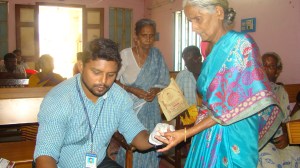
They particularly work with the following patients and where necessary, refer them to LCECU medical and nursing staff:
- Children, monitoring growth, facilitating immunization and identifying children with acute and chronic illness.
- Mothers to provide antenatal care, identifying high risk pregnancies, planning deliveries and providing postnatal care. They will promote breastfeeding and family planning.
- Those with chronic diseases such as diabetes, hypertension, asthma, COPD, tuberculosis, seizures and heart disease. They will provide information and check medical adherence.
- The elderly and those with disabilities, identifying and strengthening the existing community based rehabilitation programme.
Following this project, CMC decided to absorb the cost of the five health workers and their driver into their ongoing budget, enabling the valuable work they are doing to continue.
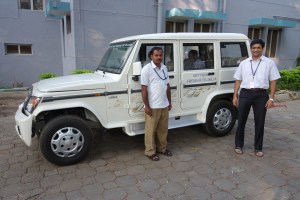
In 2015, thanks to a very generous donation, we funded a new vehicle for LCECU to transport staff and patients to the slum areas.
We recently finished funding a 2-year project to enable dental health service delivery and education for patients visiting CMC’s Low Cost Effective Care Unit.
The Covid pandemic brought about a reluctance to visit dental clinics for fear of catching Covid. Many of LCECU’s patients who previously would have attended regular dental check-ups have stayed away. The result being that patients seeking dental and oral care services have advanced dental problems, disease and infections which could have been managed earlier.
This project sought to understand the fears and concerns of patients visiting the dental clinic and to assess their understanding of oral healthcare. The funding included two years of salary for a dental graduate who has a passion for community work. Dr Sylvia Moses treated the patients whilst also capturing and analysing data along the way. The funding also paid for equipment and material to aid dental education including a large TV screen for the LCECU waiting area and a portable projector for presentations at outreach clinics.

 Friends of Vellore UK